Lumopt Lumopt

What Is a 10G SFP+ Transceiver and How Does It Work?

Time:2026-10-05 Author:Mason
0%

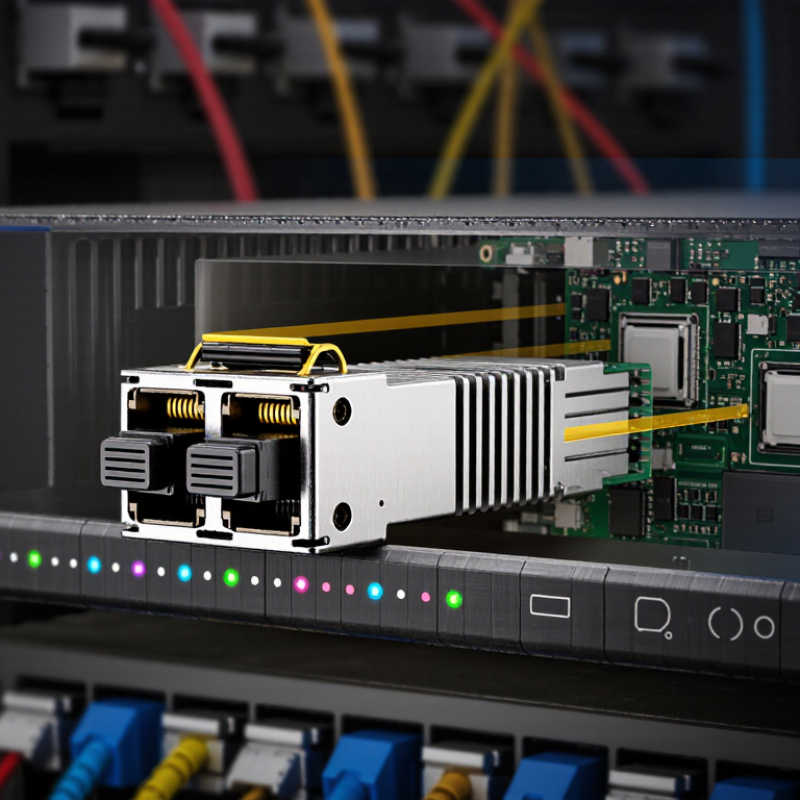
A 10G SFP+ transceiver is a compact optical or copper module that carries data at up to 10 gigabits per second. It slides into an SFP+ port, much like a small cartridge entering a switch. Inside, electronic signals meet lasers, photodiodes, and carefully controlled circuitry. The module converts electrical data into light, sends it through fiber, then converts incoming light back into electrical signals.

Robert Metcalfe, the Ethernet pioneer, famously said, “The value of a network increases with the square of the number of users.” His observation helps explain why dependable links matter. A fast network is useful only when its physical connections remain stable. In practice, choosing a 10G SFP+ transceiver involves more than checking “10G” on a product page. Engineers examine wavelength, transmission distance, fiber type, connector design, temperature range, and switch compatibility. A 10GBASE-SR module may suit a short multimode-fiber link inside a data center. A 10GBASE-LR module can reach much farther over single-mode fiber.

Small details matter.

An incorrectly matched wavelength can leave a dark link, even when every component appears new. I have also seen specifications look perfect until coding, vendor support, or diagnostic monitoring creates a problem. This is where experience becomes valuable. The following guide explains how a 10G SFP+ transceiver works, what each internal stage does, and how to evaluate one reliably. It also questions a common assumption: higher speed alone does not guarantee better network performance.
What Is a 10G SFP+ Transceiver and How Does It Work?

What a 10G SFP+ Transceiver Is

What Is a 10G SFP+ Transceiver and How Does It Work?

A 10G SFP+ transceiver is a compact, removable network module for 10-gigabit data links. The “SFP+” name describes its small form factor and enhanced performance. It fits into a compatible switch, server adapter, or storage device. The module converts electrical signals into optical signals, or sends electrical signals through a direct-attach cable.

Its working process is straightforward. A network device sends electrical data to the module. A laser converts that data into light for transmission over fiber. At the other end, a receiver changes the light back into electrical signals. Copper-based versions skip the optical conversion and use twinaxial cable instead. This makes them useful for short connections inside racks.

The correct module depends on more than speed. Fiber type, transmission distance, wavelength, connector design, and device compatibility all matter. A multimode module may suit a short data-center link, while a single-mode module can support longer runs. Many modules also report temperature, voltage, and optical power through digital monitoring.

The label can mislead.

A 10G rating does not guarantee every installation will perform equally. Dust, sharp fiber bends, poor cooling, or mismatched equipment can weaken a link. In practical testing, checking the port specification and cleaning connectors often prevents avoidable faults. Even experienced installers sometimes overlook cable length. That small detail can disrupt an otherwise carefully planned network.

What Is a 10G SFP+ Transceiver and How Does It Work?

A 10G SFP+ transceiver is a compact, hot-swappable module that converts electrical data from network equipment into optical or copper signals and converts incoming signals back into electrical data. The chart compares typical maximum link distances for common 10 Gb/s connection types.

Typical distances shown: passive direct-attach copper up to 7 m, OM3 multimode fiber up to 300 m, OM4 multimode fiber up to 400 m, and single-mode fiber up to 10,000 m for long-reach 10 Gb/s links. Actual distance depends on the transceiver specification, fiber type, connectors, and installation conditions.

The Main Components Inside a 10G SFP+ Module

What Is a 10G SFP+ Transceiver and How Does It Work?

The Main Components Inside a 10G SFP+ Module

A 10G SFP+ transceiver converts electrical data into optical signals and back again. Its small metal housing contains several carefully matched parts. The optical transmitter uses a laser diode to produce rapid light pulses. A driver circuit controls the laser’s current, preventing unstable output. On the receiving side, a photodiode detects incoming light and converts it into electrical signals.

The module also includes a receiver amplifier and signal-conditioning circuits. These components strengthen weak signals and reduce timing errors before data reaches the host device. A clock and data recovery circuit may rebuild the signal’s timing. Meanwhile, an internal memory chip stores identification details, supported wavelengths, temperature readings, and diagnostic information. The electrical connector carries high-speed data between the module and network equipment.

In field testing, heat matters more than many installation guides suggest. A blocked airflow path can raise module temperature and increase error rates. It is also worth checking fiber cleanliness, connector alignment, and the correct transmission distance. Small mistakes show up quickly at 10 gigabits per second. The design seems simple from outside, but it is not.

Tips: Keep optical ports capped when unused. Check temperature readings during heavy traffic. Confirm the fiber type, wavelength, and link budget before deployment. Do not rely only on link lights; inspect error counters and diagnostic data too.

How a 10G SFP+ Transceiver Sends and Receives Data

A 10G SFP+ transceiver is a compact module that moves data between network equipment and fiber or copper cabling. Its work begins inside the switch, server, or router. The host sends electrical signals through the SFP+ port. A laser driver then converts these signals into rapid light pulses. The optical signal travels through the fiber core, often across several kilometers.

At the other end, a photodiode detects each light change. The receiver converts those changes back into electrical signals. The host device can then process the recovered data. This sending and receiving process happens continuously, often in both directions through separate fiber strands. Timing circuits help maintain signal accuracy. Monitoring functions may also track temperature, voltage, and optical power.

The process sounds neat, but real links are less tidy. Dust, poor fiber bends, or mismatched transmission types can weaken the signal. A simplified explanation can also hide delays caused by connectors and device settings. Field experience shows that checking the cable, port speed, and fiber type prevents many confusing faults.

Tips

  • Clean both connectors before testing.
  • Confirm the transceiver supports the required wavelength and distance.
  • Check receive power when available.
  • Leave room for measurement errors, because specifications are not always real-world results.

Fiber and Cable Options for 10G SFP+ Connections

A 10G SFP+ transceiver converts electrical data into optical or electrical signals. Its connection choice depends on distance, cable routing, and operating conditions. For short data center links, multimode fiber is often practical. OM3 fiber can support up to about 300 meters, while OM4 may reach about 400 meters with suitable 10G optics. These links usually use duplex LC connectors and an 850 nm wavelength.

Single-mode fiber suits longer connections between rooms or buildings. It commonly uses 1310 nm optics and can extend several kilometers, depending on the transceiver and link budget. Check transmitter power, receiver sensitivity, connector cleanliness, and optical loss before installation. A tiny amount of dust can cause unstable performance.

Copper options are simpler for very short links. Passive direct attach cables work well inside a rack, often at lengths up to seven meters. Active optical cables can cover longer rack-to-rack paths while remaining lighter than separate transceivers and fiber patch cords. Cable routing still matters. Avoid sharp bends, crushed jackets, and mixed polarity. In field testing, the shortest cable was not always the best choice; airflow and service access sometimes mattered more. I once treated cable length as the main concern, but heat and awkward routing proved more troublesome. Specification sheets can also be unclear, so verify host compatibility, cable reach, and diagnostic support before deployment.

Key Factors for Choosing and Deploying 10G SFP+ Transceivers

A 10G SFP+ transceiver converts electrical signals into optical or copper signals for 10GbE links. The module fits a compact SFP+ port. Its practical value depends more on deployment conditions than headline speed. IEEE 802.3 defines common 10GbE options, including short-reach multimode and long-reach single-mode connections.

Choose the fiber before choosing the module. SR optics suit short data-center links using multimode fiber, while LR optics support longer links over single-mode fiber. Check wavelength, connector type, transmission distance, and optical power budget. A 2024 global bandwidth research report recorded 29% growth in international capacity during 2023. That pressure makes reliable 10G upgrades useful, but capacity alone does not prevent link failures.

Compatibility needs careful testing. Confirm port coding, operating temperature, digital optical monitoring, and vendor interoperability. A 10G link may show “up” while errors quietly increase. Inspect both fiber ends, clean the connectors, and verify polarity with a light meter. My deployment notes often reveal one overlooked detail: the patch cord exceeded the planned loss budget. The spreadsheet looked correct. It was not.

Power consumption also matters in dense racks. Measure module temperature beside the switch, not in a laboratory. Industry data-center surveys continue to show rising rack power density, so thermal headroom deserves attention. Keep spare modules from the same specification class, yet avoid assuming every coded module behaves identically. Real networks are less tidy than product sheets suggest.

FAQS

What is a 10G SFP+ transceiver?

It is a compact, removable module for 10-gigabit network connections. It fits compatible switches, server adapters, and storage devices. Small module, serious speed.

How does a 10G SFP+ optical module work?

The device sends electrical data to the module. A laser converts the data into light pulses for fiber transmission. A receiver changes the light back into electrical signals.

Can a 10G SFP+ connection use copper cable?

Yes. Direct-attach versions use twinaxial copper cable instead of optical conversion. They suit short connections inside racks. Keep the cable length in mind.

What factors determine the correct module?

Check the fiber type, transmission distance, wavelength, connector design, and device compatibility. Speed alone is not enough. The label can mislead.

What is the difference between multimode and single-mode fiber?

Multimode fiber generally suits shorter data-center links. Single-mode fiber can support longer transmission distances. The wrong fiber choice may weaken or interrupt the link.

What components are inside a 10G SFP+ module?

Common parts include a laser diode, driver circuit, photodiode, receiver amplifier, and signal-conditioning circuits. A memory chip stores identification and diagnostic details. It is more complex than it looks.

Can temperature affect module performance?

Yes. Blocked airflow can raise module temperature and increase error rates. Check temperature readings during heavy traffic. Cooling problems are easy to overlook.

How can installation faults be reduced?

Keep unused optical ports capped. Clean connectors and check their alignment before connection. Confirm fiber type, wavelength, distance, and link budget. Do not rely only on link lights; inspect error counters and diagnostic data too.

Conclusion

A 10G SFP+ transceiver is a compact, hot-swappable network module designed to provide 10-gigabit data transmission between compatible switches, servers, storage systems, and other network devices. Its main internal components include a transmitter, receiver, optical or electrical interface, signal-processing circuitry, and monitoring functions. Together, these parts convert electrical data into optical or high-frequency electrical signals for transmission and then convert incoming signals back into usable digital data.

A 10G SFP+ transceiver can support different connection choices, including single-mode or multimode fiber and various direct-attach or copper-based cables, depending on distance, bandwidth needs, and installation conditions. When selecting and deploying one, users should consider transmission range, connector type, wavelength, cable compatibility, power consumption, operating temperature, and equipment support. Proper installation and matching specifications help maintain stable links, reduce signal loss, simplify network expansion, and ensure reliable 10-gigabit performance.

Mason

Mason

Mason is a seasoned marketing professional with a deep expertise in the company's offerings and a passion for driving brand awareness. With a strong background in digital marketing strategies, he has an innate ability to connect with diverse audiences and effectively communicate product benefits.......