Lumopt
Global demand for data-center bandwidth is reshaping the market for high-speed optical networking. Industry reports from LightCounting and Dell’Oro Group continue to track strong investment in cloud infrastructure, Ethernet switching, and optical transceivers. Their findings suggest that buyers increasingly evaluate compatibility, supply stability, and total operating cost, not only headline speed.
This guide examines 10 Best 40G QSFP+ Transceivers for Global Buyers. A 40G QSFP+ transceiver can connect servers, switches, and aggregation platforms through a compact, four-lane optical interface. Common choices include SR4 for short multimode-fiber links, LR4 for longer single-mode connections, and extended-temperature versions for demanding environments. The right module depends on more than distance. Fiber type, connector design, wavelength, switch coding, digital diagnostics, and operating temperature can all affect deployment results.
Real-world testing matters.
The Ethernet Alliance’s technical guidance and QSFP Multi-Source Agreement specifications provide useful reference points for interoperability and form factors. However, compliance claims still require verification through datasheets, coding records, and equipment-level testing. Some products perform well in controlled laboratories but behave differently after installation, especially across mixed vendor networks. That limitation deserves attention. This selection therefore considers technical specifications, manufacturer documentation, warranty support, quality-control practices, and buyer feedback. It does not assume that the most expensive module is automatically the safest choice. Global purchasers should confirm platform compatibility and regional support before placing volume orders.
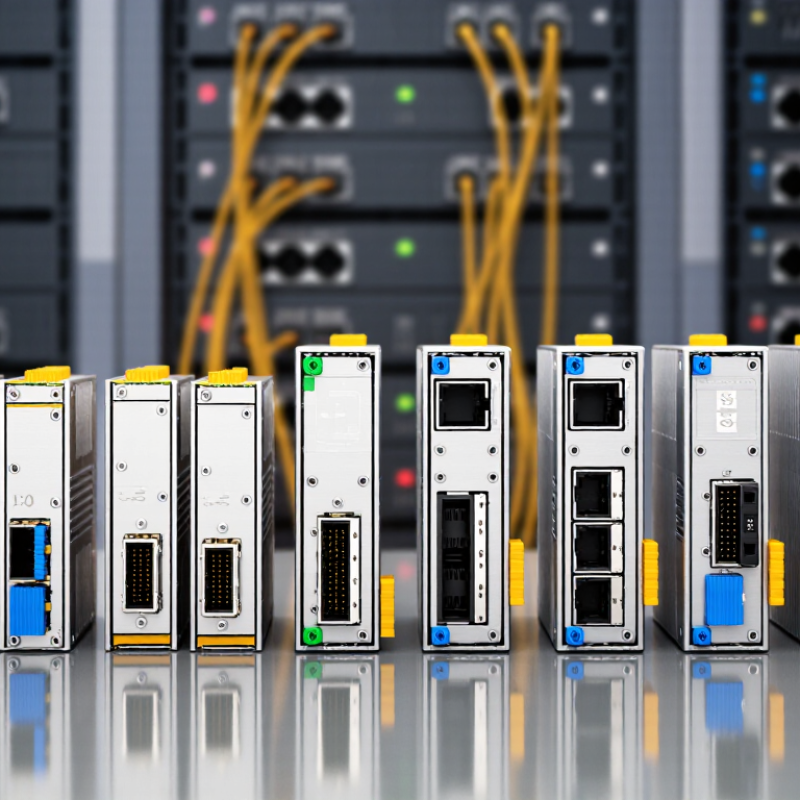
A 40G QSFP+ transceiver is a compact optical module that carries 40 gigabits per second between network devices. It usually uses four 10Gb/s electrical lanes on the host side. Inside the module, driver circuits control optical transmitters, while receivers convert incoming light back into electrical signals. The switch sees one 40G connection, not four separate cables.
The optical design depends on distance and cabling. Short-reach versions commonly send parallel light through multimode fiber and an MPO connector. Longer-reach versions may combine multiple wavelengths over duplex single-mode fiber. A practical installation requires matching the module type, fiber category, connector polarity, and switch port. Small details matter. A reversed MPO polarity can leave a link dark, even when every component appears compatible.
Temperature, power limits, and digital diagnostics also affect reliability. Monitoring optical power can reveal dirty connectors or gradual signal loss before the link fails. However, specifications can look cleaner than real installations. Dust, tight cable bends, and mixed firmware settings sometimes create confusing symptoms. A careful technician should inspect the physical path before replacing hardware. Compatibility is not only about speed; coding, lane support, and module recognition must also align. The most suitable 40G QSFP+ choice therefore depends on distance, fiber infrastructure, port requirements, and the operating environment.
For global buyers, 40G QSFP+ selection starts with standards, not price. IEEE 802.3ba defines 40GbE operation, while SFF-8436 describes key QSFP+ mechanical and electrical requirements. The Ethernet Alliance 2024 Ethernet Roadmap lists 40GbE as a mature generation, alongside rapid growth in 400GbE and 800GbE deployments. That matters. A 40G module may fit today’s switch, but its upgrade path deserves attention.
Form factor and fiber type must match precisely. A 40GBASE-SR4 QSFP+ typically uses four optical lanes through an MPO-12 connector. It supports about 100 meters over OM3 and 150 meters over OM4 multimode fiber. A 40GBASE-LR4 module uses duplex LC connectors and single-mode fiber, commonly reaching 10 kilometers. For longer campus links, ER4 can extend toward 40 kilometers, but optical budgets and cleaning quality become critical. Small details matter.
Fiber polarity can still cause failed installations. I have seen a correct-looking MPO cable reverse transmit and receive lanes. The interface stayed dark. The Fiber Optic Association continues to emphasize connector inspection, polarity control, and loss testing in professional installations. Market reports from Dell’Oro Group also identify higher-speed Ethernet as the strongest growth area, so 40G equipment should be purchased selectively. It remains practical for legacy aggregation, but may be a poor choice for a new backbone.
The chart compares representative 40G QSFP+ interface standards by maximum typical link distance. SR4 uses parallel multimode fiber, LR4 and ER4 use duplex single-mode fiber, PSM4 uses parallel single-mode fiber, and CR4 uses four-lane copper cabling. Distances can vary with cable quality, transceiver specifications, and deployment conditions.
Comparing the 10 best 40G QSFP+ transceivers requires more than checking price and reach. I would begin with the network design. IEEE 802.3ba defines 40GBASE-SR4 for four parallel optical lanes, typically reaching 100 meters over OM3 and 150 meters over OM4 fiber. For longer links, 40GBASE-LR4 uses single-mode fiber and supports distances near 10 kilometers. Numbers matter.
A practical comparison should score each module by optical power, receiver sensitivity, lane balance, power consumption, and temperature range. Digital optical monitoring is valuable during deployment because it exposes unstable transmit power or rising temperature. The QSFP+ MSA also provides a useful mechanical and electrical baseline, but compliance alone does not guarantee smooth interoperability. Test with the target switch, fiber type, and breakout cable. Small mismatches can create large troubleshooting delays.
Traffic forecasts add context. The Cisco Annual Internet Report projected global IP traffic at 396 exabytes per month by 2022, reinforcing the need for dependable data-center links. However, bandwidth demand does not justify selecting the highest-priced optic. A lower-power SR4 may suit a short rack connection, while LR4 can reduce regeneration points across a campus. I still distrust a perfect score. Lab results can miss dust, sharp fiber bends, or mixed firmware behavior. A weighted table, backed by thermal cycling and error-rate testing, gives buyers a more honest ranking. That process is slower. It is also safer.
10 Best 40G QSFP+ Transceivers for Global Buyers?
Performance depends on more than nominal 40Gbps speed. The IEEE 802.3ba standard defines 40GBASE-SR4 with four 10Gbps lanes. It supports 100 meters over OM3 fiber and 150 meters over OM4 fiber. That distance suits short data-center links. It does not suit every regional campus.
For longer routes, 40GBASE-LR4 commonly reaches 10 kilometers over single-mode fiber. Its duplex LC connector simplifies migration from existing 10G infrastructure. PSM4 and CWDM4 options can extend reach to approximately 2 kilometers, but their optical designs differ. Check the switch’s supported modulation, lane mapping, and breakout mode before ordering. A 4x10G breakout cable may be useful, yet it can expose compatibility problems. I have seen links pass optical tests but fail during port negotiation.
The Cisco Annual Internet Report projected global IP traffic at 396 exabytes per month by 2022. That growth makes stable uplinks increasingly important, even when 40G is not the newest option. Buyers should compare DOM monitoring, operating temperature, connector polish, and fiber loss budgets. IEEE figures are dependable, but real deployments lose distance through patch panels, bends, and dirty connectors. Vendor-coded firmware can also restrict interoperability, despite matching specifications. That detail is easy to overlook. Test one module with the exact switch, fiber type, and software release before placing a large international order.
| Rank | Transceiver Type | Typical Standard | Optical Technology | Wavelength | Maximum Distance | Fiber and Connector | Lane Configuration | Typical Power | Best-Fit Network Application | Compatibility Factors |
|---|---|---|---|---|---|---|---|---|---|---|
| 1 | 40GBASE-SR4 | IEEE 802.3ba | VCSEL multimode optics | 850 nm | 100 m on OM3; 150 m on OM4 | OM3/OM4 multimode fiber; MPO-12 | 4 × 10.3125 Gb/s | Typically ≤ 1.5 W | Short-reach data-center spine, leaf, and server links | Requires an MPO polarity plan, parallel-fiber cabling, and host support for 40GBASE-SR4. |
| 2 | 40GBASE-CSR4 | Extended-reach 40G-SR4 MSA implementation | Enhanced VCSEL multimode optics | 850 nm | Up to 300 m on OM3; up to 400 m on OM4 | OM3/OM4 multimode fiber; MPO-12 | 4 × 10.3125 Gb/s | Typically ≤ 1.5 W | Longer intra-building data-center links using existing multimode cabling | Both ends should explicitly support CSR4; standard SR4 reach specifications should not be assumed. |
| 3 | 40GBASE-LR4 | IEEE 802.3ba | CWDM distributed-feedback laser optics | Approximately 1271/1291/1311/1331 nm | Up to 10 km | Duplex single-mode fiber; duplex LC | 4 × 10.3125 Gb/s, wavelength multiplexed | Typically ≤ 3.5 W | Campus, metropolitan, and data-center interconnects | Needs single-mode fiber, clean LC connectors, and matching LR4 optical specifications at both ends. |
| 4 | 40GBASE-ER4 | IEEE 802.3ba extended-reach class | CWDM distributed-feedback laser optics | Approximately 1271/1291/1311/1331 nm | Up to 40 km, subject to link budget | Duplex single-mode fiber; duplex LC | 4 × 10.3125 Gb/s, wavelength multiplexed | Typically ≤ 3.5 W | Metro aggregation and long campus or inter-building links | Verify optical budget, dispersion limits, host power allowance, and support for extended-reach QSFP+ modules. |
| 5 | 40G-PSM4 | PSM4 Multi-Source Agreement | Parallel single-mode laser optics | 1310 nm | Up to 2 km | Single-mode parallel fiber; MPO-12 | 4 × 10.3125 Gb/s | Typically ≤ 2.5 W | Cost-effective short and medium data-center interconnects over single-mode fiber | Not interoperable with LR4 merely because both use single-mode fiber; MPO polarity and four-lane mapping are critical. |
| 6 | 40G-PLR4 | PLR4 Multi-Source Agreement | Parallel single-mode laser optics | 1310 nm | Up to 10 km | Single-mode parallel fiber; MPO-12 | 4 × 10.3125 Gb/s | Typically ≤ 2.5 W | Longer-reach parallel-fiber campus and data-center links | Requires four dedicated single-mode fiber pairs or equivalent MPO infrastructure; confirm host PLR4 support. |
| 7 | 40G-CWDM4 | CWDM4 Multi-Source Agreement | Four-wavelength WDM optics | Approximately 1271/1291/1311/1331 nm | Up to 2 km | Duplex single-mode fiber; duplex LC | 4 × 10.3125 Gb/s, wavelength multiplexed | Typically ≤ 3.5 W | Simple two-fiber data-center interconnects requiring more reach than SR4 | Uses duplex LC rather than MPO; do not mix with LR4 unless both ends share the same CWDM4/LR4 optical design. |
| 8 | 40G-BiDi Multimode | 40G-BiDi MSA implementation | Two-wavelength bidirectional VCSEL optics | Typically around 850 nm and 900 nm bands | 100 m on OM3; 150 m on OM4 | OM3/OM4 multimode fiber; duplex LC | Bidirectional transmission over two fibers | Typically ≤ 1.5 W | Upgrading short-reach links while reusing duplex LC multimode cabling | Must be deployed as a matched pair; it is not equivalent to SR4 and requires compatible wavelength directions. |
| 9 | 40G-SWDM4 | SWDM4 Multi-Source Agreement | Shortwave WDM multimode optics | Four bands approximately from 850 to 940 nm | Typically 100 m on OM3; up to 150 m on OM4 | OM3/OM4 multimode fiber; duplex LC | 4 × 10.3125 Gb/s, wavelength multiplexed | Typically ≤ 1.5 W | Duplex-LC multimode upgrades that avoid MPO cabling changes | Requires SWDM4-compatible optics and fiber performance; standard SR4 modules are not direct substitutes. |
| 10 | 40GBASE-SR4 Breakout | IEEE 802.3ba with 4 × 10G breakout operation | VCSEL multimode optics | 850 nm | 100 m on OM3; 150 m on OM4 | OM3/OM4 multimode fiber; MPO-12 to 4 × duplex LC | 1 × 40G to 4 × 10.3125 Gb/s | Typically ≤ 1.5 W | Connecting a 40G switch port to four independent 10G server or switch ports | Requires host breakout support, correct MPO-to-LC polarity, and four compatible 10G optical endpoints. |
Distance figures are typical maximum values under compliant cabling conditions. Actual reach depends on fiber grade, insertion loss, connector cleanliness, splice loss, optical power budget, temperature, and host-device interoperability. Always verify the module's data sheet, MSA or IEEE specification, EEPROM coding requirements, operating temperature range, and DOM support before deployment.
Installing 40G QSFP+ transceivers requires more than matching connector shapes. Confirm the optical type, reach, fiber grade, and switch compatibility before opening the package. A mismatch may produce unstable links or no signal at all. Check the module label and equipment interface carefully. Small details matter.
Wear an antistatic strap and keep protective caps on unused ports. Clean both fiber ends with approved lint-free tools, even when they look spotless. Insert the transceiver gently until it locks firmly. Never force the latch. After connection, verify link status and measure optical power with a calibrated meter. Test each lane when the equipment supports lane-level diagnostics. Record temperature, transmit power, receive power, and error counts. These records help identify gradual degradation across international installations.
Maintenance should include scheduled inspections, airflow checks, and fiber cleaning. Dust buildup near dense switch racks can raise operating temperatures. Replace damaged patch cords instead of repeatedly adjusting them. Remote teams should use identical test procedures and shared records. That reduces confusion between time zones. I have found that labeling both ends of every fiber saves more time than expected. Still, test results are not perfect evidence. Instruments drift, firmware changes, and human mistakes happen. Recheck unusual readings before replacing a working module. Store spare transceivers in dry, antistatic packaging, with their compatibility data attached.
Compare reach, optical power, receiver sensitivity, power use, temperature range, and lane balance. Price alone is not enough.
It can reach 100 meters over OM3 fiber and 150 meters over OM4 fiber. This suits short data-center links.
Choose it for longer links over single-mode fiber. It commonly supports distances near 10 kilometers.
They can reach approximately 2 kilometers. Their optical designs differ, so check device compatibility before ordering.
Multimode fiber suits shorter links, while single-mode fiber supports longer routes. Patch panels, bends, and dirty connectors reduce the practical distance.
Confirm lane mapping, breakout support, switch compatibility, and software behavior. A 4x10G cable may work optically but fail port negotiation.
Yes. DOM can reveal unstable transmit power, rising temperature, and unusual receiver levels. These details help locate faults earlier.
No. A module can meet the QSFP+ MSA and still fail with a specific switch or cable. Test the exact setup first.
Test one module with the target switch, fiber, cable, and software release. Check error rates, temperature changes, and link stability.
Not necessarily. A low-power SR4 may suit a rack connection, while LR4 may reduce regeneration points. My ranking could still be imperfect.
This guide explains what a 40G QSFP+ transceiver is and how it enables high-speed data transmission through compact, hot-swappable hardware. It reviews key standards, form factors, and fiber compatibility options, helping global buyers understand the differences between multimode and single-mode solutions, connector types, and common network applications. The article also introduces a practical method for comparing the 10 best 40G QSFP+ transceivers according to optical performance, transmission distance, power consumption, interoperability, and overall deployment requirements.
In addition, the guide examines important factors such as network compatibility, link stability, and operating conditions. It provides useful recommendations for installation, including checking equipment support, cleaning fiber connections, verifying polarity, and testing links with suitable diagnostic tools. Regular monitoring, temperature control, and proper maintenance can help extend service life and reduce unexpected downtime. By considering performance, distance, standards, and long-term support together, buyers can select a reliable 40G QSFP+ transceiver for data centers, enterprise networks, and other high-bandwidth environments.
